Technical SEO Services for Car Dealerships Fix Speed, Indexation & VDP Optimisation
Specialist technical SEO for UK car dealerships. Fix VDP indexation, page speed, duplicate content, and schema markup — so Google can find, crawl, and rank every car you sell.

Your Best Inventory Is Invisible to Google
Car dealerships face technical problems that most other businesses never deal with. 200 VDPs that must all be indexed. Stock feed duplication across AutoTrader and Motors.co.uk. Dynamic inventory that changes daily. Platform constraints on Dealer.com, Keyloop, GForces, and Pinewood. OEM duplicate content on manufacturer descriptions.
According to Google's research, pages meeting Core Web Vitals thresholds convert 35% better than slower pages. And with 62% of car browsing happening on mobile, a slow VDP sends ready-to-buy customers directly to your competitor.
Technical SEO — The 30-Second Version
Technical SEO for car dealerships is the behind-the-scenes optimisation that helps Google find, crawl, index, and rank your Vehicle Detail Pages and other important content.
It is not content writing. It is not link building. And it is definitely not a one-time fix. It is ongoing work that compounds month after month.
The 7 Technical SEO Issues Killing Car Dealership Websites
These are the seven issues we find on almost every dealership site we audit. Each one is silently costing you rankings and customers.
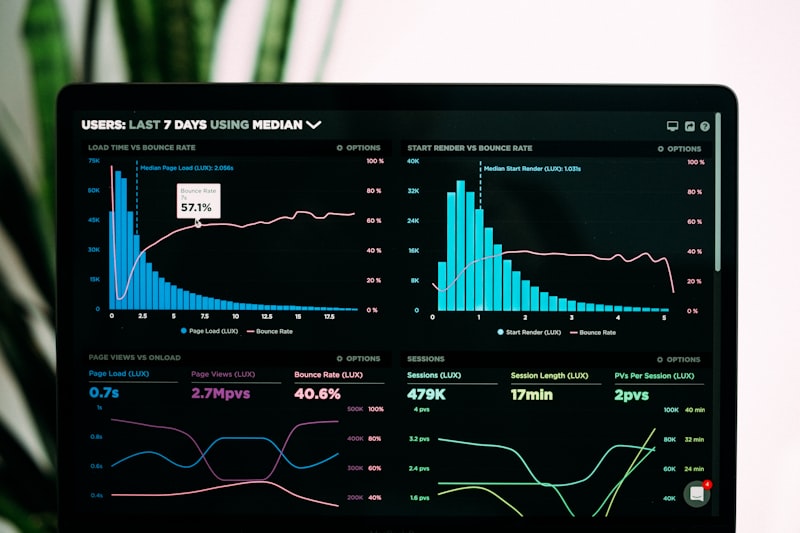
Slow Page Speed on VDPs
Most dealers test homepage speed. But customers land on VDPs. A 4-second VDP sends ready-to-buy customers to your competitor.
Compress images (60–80% reduction). Enable caching. Minify code. Use fast hosting. Target under 2.5 seconds for LCP.
Chatbot Auto-Popup Performance Drag
Auto-popup chatbots force multiple external server calls. Each call slows your page load time — killing both rankings and user experience.
Delay chatbot loading until after the page loads. Or use lighter alternatives that do not require multiple external server calls.
Orphaned Inventory Pages
New vehicle pages not linked from homepage or category pages. Google discovers pages by following links. No links means no discovery. Your inventory is invisible.
Proper internal linking structure. XML sitemap inclusion. Clear navigation from homepage → category pages → individual VDPs.
Duplicate Content from Stock Feeds
Your DMS exports the same car descriptions to your site, AutoTrader, Motors.co.uk, and other dealers. Google may rank none of them well.
Canonical tags pointing to your site as the master copy. Rewrite VDP descriptions to be unique to your dealership.
Poor Crawl Budget Management
If Googlebot wastes time on filter pages or sorted-by-price URLs, it may not crawl your VDPs. You are paying to stock cars nobody can find.
XML sitemap with priority tags. Remove sold cars. Block parameter-based URLs via robots.txt or noindex tags.
Missing or Incorrect Schema Markup
Search engines do not understand your VDP content without structured data. No rich snippets means lower click-through rates. You look like everyone else.
Implement Vehicle Schema, Review Schema, Offer Schema, and Aggregate Rating on all VDPs.
Mobile Performance Failures
Google uses mobile-first indexing. If your mobile site is slow or hard to use, you rank poorly regardless of desktop performance. Core Web Vitals failures push you down the rankings and increase mobile abandonment.
Responsive design that adapts to any screen size. Touch-friendly navigation. Fast mobile load times under 2.5 seconds for LCP. Google's mobile-first indexing has been active since 2020.
Page Speed & Core Web Vitals for Car Dealerships
Core Web Vitals are Google's page experience metrics. Pages meeting all three thresholds convert 35% better than slower pages.
| Metric | What It Measures | Good Target | Why It Matters for Dealers |
|---|---|---|---|
| LCP | Main content load time (Largest Contentful Paint) | Under 2.5s | VDP hero image loads slowly = customer leaves |
| INP | Site responsiveness (Interaction to Next Paint) | Under 200ms | Buttons don't respond = frustration |
| CLS | Visual stability (Cumulative Layout Shift) | Under 0.1 | Page jumps while loading = accidental clicks |
The 28-Day Ranking Lag
If you fix page speed today, there is approximately a 28-day lag before rankings move. Google's Chrome User Experience Report measures performance over a rolling window. The clock starts when you make the change.
Do not expect overnight ranking improvements after speed fixes. Be patient. The 28-day lag is completely normal and expected.
Image Optimisation for Vehicle Photos
Uncompressed images are the number one cause of slow VDPs. A 5MB photo can be reduced to 500KB without visible quality loss — 90% smaller.
We compress all vehicle photos before upload using TinyPNG, ShortPixel, or automated plugins. Your customers will not notice the difference. Google will.
Vehicle Detail Pages (VDPs)
Most dealership traffic lands on VDPs, not your homepage. A customer searching "2019 BMW X3 Manchester" lands directly on that car's page. Most dealerships test homepage speed. That is the wrong page to test.
VDP Technical Optimisation — 8 Steps
- 1Optimise VDP load speed. Target under 2.5 seconds for LCP on individual car pages.
- 2Add Vehicle Schema — price, mileage, VIN, fuel type, transmission, condition, and location.
- 3Write unique meta titles: [Year] [Make] [Model] [Trim] [City] | [Dealership Name]
- 4Write unique meta descriptions with price, mileage, key features, and a call to action.
- 5Optimise images — compress, add descriptive file names, and write alt text for every photo.
- 6Add internal links to related cars (same make, similar price) and your main used cars page.
- 7Remove sold cars from sitemap — set priority to zero or remove entirely.
- 8Add original VDP descriptions — never rely on default OEM or DMS-supplied descriptions.

Duplicate Content from Stock Feeds — The Full Solution
A canonical tag tells Google which version of a page is the master copy. We put canonical tags on your VDPs pointing to themselves, then ask aggregators to point canonical tags back to your website.
This tells Google your website is the original source. The other sites are copies. Google then prioritises your VDP in search results over AutoTrader.
Schema Markup for Car Dealerships
Schema markup enables rich snippets — price, mileage, ratings, and availability appearing directly below your listing in search results before the customer clicks.
Vehicle Schema
Price, mileage, VIN, fuel type, transmission, and condition shown directly in search results.
Review Schema
Star ratings and review count displayed in search results. Increases click-through rate significantly.
Offer Schema
Pricing, availability, and financing offers visible in search results before the customer visits your site.
Aggregate Rating
Your overall review score displayed at a glance. Explicitly tells AI tools your reputation score.
LocalBusiness Schema
NAP, hours, and services clearly defined. Strengthens your local presence across search and AI tools.
Mobile SEO for Car Dealerships
Google primarily uses the mobile version of your website for ranking and indexing — this has been the case since 2020. With 62% of car browsing happening on mobile, if your mobile site is slow or hard to use, you rank poorly regardless of desktop performance.
Mobile Optimisation Checklist

Dealer.com, Keyloop, GForces, Pinewood — We Know Your Platform
Every dealership platform has unique SEO limitations and opportunities. General SEO advice often does not work within these constraints. We do.
Dealer.com
Limited meta tag control, template restrictions that prevent direct code access.
Optimise within allowed fields. Use structured data workarounds. Maximise all accessible SEO levers.
Keyloop
Dynamic URL structures and faceted navigation creating crawl and duplicate content issues.
Canonical tags and parameter handling to control what Google crawls and indexes.
GForces NetDirector
Inventory feed complexity and crawl budget challenges on large dealership sites.
Sitemap optimisation with priority tagging and sold car removal to protect crawl budget.
Pinewood
DMS integration quirks causing duplicate content issues across the vehicle catalogue.
Description rewriting and canonicalisation strategy tailored to Pinewood's specific structure.
AI Search & GEO for Car Dealerships
According to Keyloop's analysis, 58% of consumers now use AI to compare products before buying. AI search tools like ChatGPT, Google Gemini, and Perplexity are changing how customers find dealerships.
What Is GEO?
Generative Engine Optimisation (GEO) optimises your content for AI-generated answers, not just traditional search results. AI tools cross-reference your NAP, reviews, and citations across multiple directories — consistency is now more important than ever.
Server Log Analysis
We use server log analysis to track AI bot crawling. Look for ChatGPT-user and Google-Extended in your server logs — this shows exactly what AI is reading on your site and what it is ignoring.
Structured Data for AI
Vehicle Schema, Review Schema, and Aggregate Rating help AI understand your inventory and reputation. AI-generated content is significantly more likely to cite well-structured, logically organised content.
Entity Clarity
Make sure Google and AI tools know your dealership as a specific business at a specific location with specific services. Clear entity signals across the web prevent AI tools from confusing you with competitors.
Technical SEO Timeline — When Will You See Results?
Realistic expectations matter. Here is what to expect — and what not to expect — at each stage.
| Timeframe | What to Expect | What NOT to Expect |
|---|---|---|
| Weeks 1–2 | Technical audit complete, all issues identified and fixes planned | Rankings improvement |
| Weeks 3–4 | Critical fixes implemented — orphaned pages, crawl issues, duplicate content | Overnight VDP rankings |
| Weeks 5–8 | Google re-crawls fixed pages, initial indexation improvements visible | Top 3 for competitive terms |
| Weeks 9–12 | Page speed improvements reflected in Chrome UX Report (28-day lag applies) | Complete transformation |
| Months 4–6 | Consistent ranking gains, VDPs appearing for long-tail searches | Dominating every keyword |
Technical SEO Case Studies — UK Dealerships
Real results from real UK car dealerships. Full named case studies available on request during your free audit call.
Manchester — 30% to 85% VDP Indexation
Challenge: 500+ VDPs but only 30% indexed. LCP of 4.5 seconds. Over 200 orphaned inventory pages. Severe duplicate content from stock feed.
Dealer.com Platform — Rich Snippets & Test Drives Up 35%
Challenge: On Dealer.com with significant platform constraints. OEM descriptions duplicated across all franchised dealers nationwide. Mobile failing all Core Web Vitals.
Transparent Technical SEO Pricing
Pricing depends on three factors: your dealership size, the number of VDPs, and your platform complexity.
Independent dealers with under 200 VDPs invest in foundational packages. Large dealerships with 200–1,000+ VDPs invest in advanced packages with crawl budget management. Multi-location groups invest in scaled technical SEO per location.
- Rolling monthly contract — no twelve-month lock-ins
- No setup fees — not ever, not on any package
- Free technical SEO audit — we crawl your entire site first
- Transparent pricing — we quote exactly what you need
- You own your Search Console and Analytics accounts
What Every Engagement Includes
No arbitrary tiers. No hidden extras. Every technical SEO engagement covers these as standard.
- Full site crawl and technical audit before we start
- VDP speed optimisation — compressed images, caching, minification
- Crawl budget management and XML sitemap optimisation
- Duplicate content resolution and canonical tag strategy
- Vehicle, Review, Offer, and Aggregate Rating schema
- Mobile Core Web Vitals fixes
- Orphaned page resolution and internal linking
- AI search readiness (GEO) — structured data for AI tools
- Monthly plain-English reporting — no jargon
Frequently Asked Questions
Why UK Dealerships Choose Us for Technical SEO
100% UK Car Dealership Focus
We do not work with restaurants, plumbers, or e-commerce stores. We know your platforms, your inventory feeds, and your technical constraints inside out.
Platform-Specific Expertise
Dealer.com, Keyloop, GForces NetDirector, Pinewood. Each platform has unique SEO limitations. General SEO advice does not work on dealer platforms. We do.
Rolling Monthly Contract
No twelve-month lock-ins. No setup fees. Cancel with 30 days' notice. We earn your business every month by delivering results, not trapping you in paperwork.
Transparent Reporting
No vanity metrics. No jargon. Direct access to your dedicated technical SEO manager — not a junior account handler who doesn't know your platform.
Free Site Crawl Audit
Before you commit to anything, we crawl your entire site and show you exactly what is broken, what is working, and what we would fix first.
White-Hat Only
No black-hat SEO. No crawl budget manipulation tricks. Full compliance with Google Guidelines. Sustainable, long-term ranking growth — no shortcuts.
Stop Losing Customers to
Slow VDPs & Orphaned Pages
Technical SEO ensures Google can find, crawl, index, and rank every car you sell. Without it, your best inventory is invisible to customers who are ready to buy.
The One Critical Question Every Dealer Must Ask
When evaluating any technical SEO agency, always ask: "Will I own my Google Search Console and Analytics accounts at the end of our engagement?" If the answer is no, walk away. Every reputable agency sets up accounts in the dealer's name — never their own.